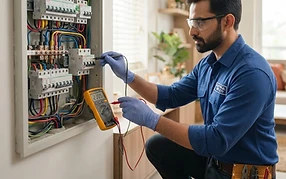

A home repair goes wrong in the first two minutes far more often than in the last ten. That is usually not because the technician was unskilled, but because the job was never described properly. This guide covers the small habits that make a booking predictable.
Describe the problem, not the part
"Tap is leaking" is a starting point. "Kitchen sink mixer tap drips at the base even when closed, second floor, no spare parts at home" saves an entire visit. Photograph the problem from two angles, one close and one showing the surroundings, and mention the floor or the room. Technicians read the notes before they leave their base, and a clear note decides what they carry.
Understand what the starting price means
A starting price covers the standard visit and the most common fix. It exists so you have a number before anyone reaches your gate. Anything beyond that, such as an extra part, a second unit, or a job that needs height work, should be shown to you as a separate line before the work continues. Ask for that breakdown before the first screw is turned, not after.
Choose on arrival time as much as on rating
A strong rating tells you the work was good. It does not tell you how long you will wait. Look at distance and working radius, and use the arrival window as the real promise. When you need a job finished before a specific hour, choose the nearest verified professional rather than the best-known one.
Decide before you book: on-demand or scheduled
Use on-demand for anything that blocks your day: a dead power socket, a leaking line, a fan that will not start. Use scheduled slots for planned work where you want to be home and unhurried, such as servicing three AC units on a Saturday morning.
Keep the record
Every booking on QuickFIX Global Connect keeps its status trail, so you can see when a professional was assigned, when they were on the way, and when the work was marked complete. If something is disputed later, that trail is what settles it.
Review honestly, and specifically
A three-line review that names what went well and what did not is worth more than five stars with no words. It helps the next customer, it helps the professional improve, and it keeps the directory honest.